
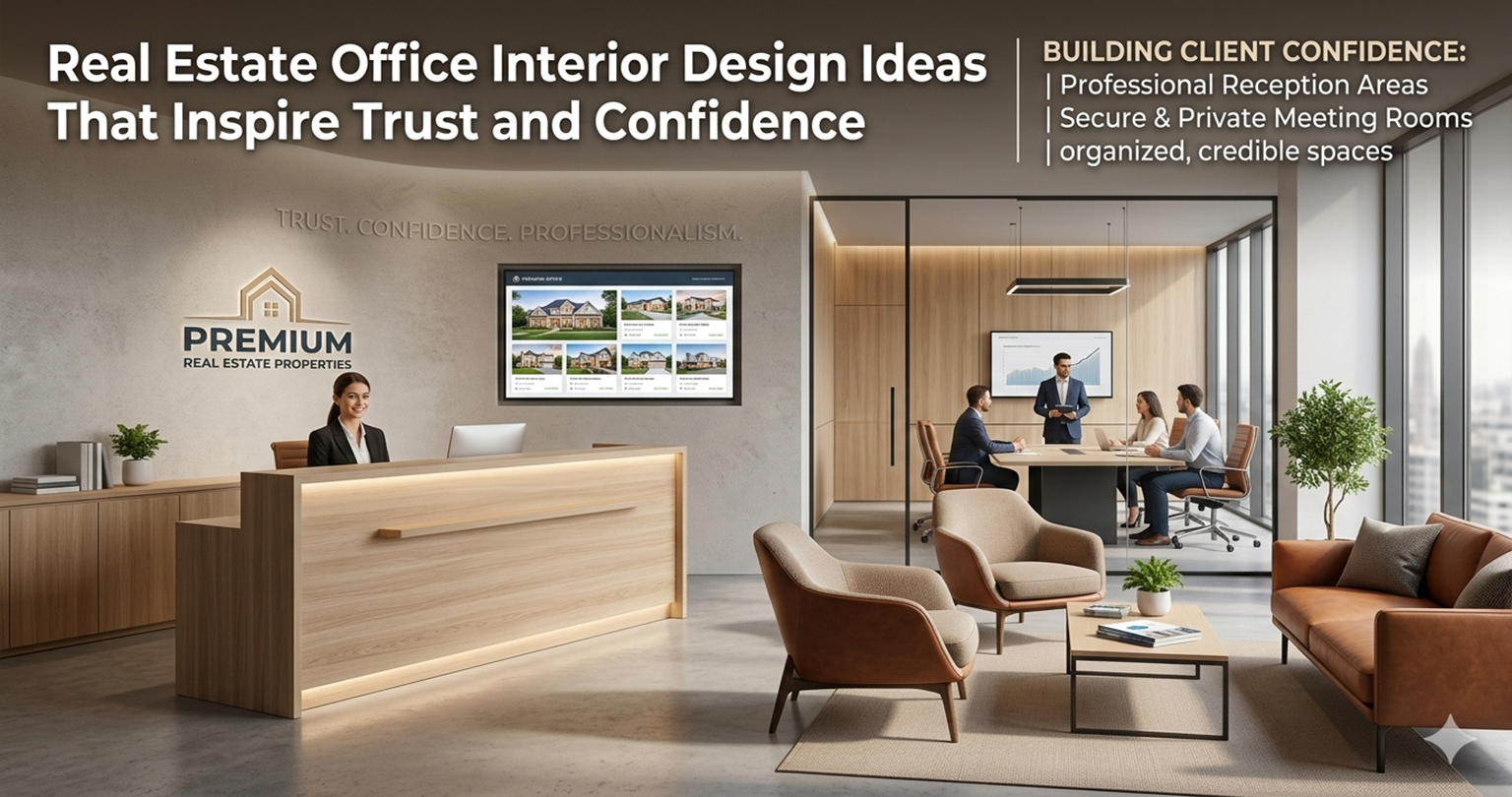
In the real estate industry, first impressions play a very important role. When clients visit a real estate office, the design and atmosphere of the space immediately influence how they perceive the business. A well-designed office can make clients feel comfortable, confident, and more willing to trust the services being offered. On the other hand, a poorly organized or outdated office may create doubt about the professionalism of the company.
Real estate is a business that relies heavily on trust and strong relationships. Clients are often making major financial decisions, such as buying or selling property. Because of this, they want to work with professionals who appear reliable and knowledgeable. A thoughtfully designed office environment helps communicate credibility and professionalism from the moment a client walks through the door.
Office design also affects the productivity and motivation of the real estate team. A clean, organized, and visually appealing workspace can help agents stay focused and perform their work more efficiently. Comfortable workstations, welcoming meeting areas, and well-planned layouts create a positive environment for both employees and clients.
Modern real estate offices are increasingly focusing on interior design that combines style, functionality, and comfort. By creating a welcoming and professional workspace, real estate businesses can build stronger client relationships and present themselves as trustworthy experts in the property market.
The Role of Interior Design in Building Client Confidence
Interior design plays a major role in shaping how clients perceive a real estate business. When someone walks into a real estate office, they immediately notice the layout, furniture, lighting, and overall atmosphere of the space. A well-designed office can create a strong sense of professionalism and reliability, which helps build client confidence from the very beginning.
In the real estate industry, trust is extremely important. Clients are often making significant financial decisions when buying or selling property. Because of this, they want to work with agents and companies that appear organized, professional, and dependable. An office that looks clean, modern, and well-planned can reassure clients that they are dealing with experienced professionals.
Interior design also reflects the brand image of the real estate company. A thoughtfully designed office communicates attention to detail and commitment to quality. Stylish furniture, proper lighting, and organized workspaces show that the business values professionalism and client experience. When clients feel comfortable in the office environment, they are more likely to trust the services offered.
Another important aspect is the layout of the workspace. A well-organized office allows agents to work efficiently while also providing comfortable areas for client meetings and discussions. Private meeting rooms, welcoming reception areas, and clear navigation within the office all contribute to a positive client experience.
Many businesses achieve these results by incorporating strategic Commercial Interior Design principles. By carefully planning the layout, furniture, and visual elements of the office, companies can create workspaces that inspire confidence and strengthen their professional reputation.
Ultimately, effective interior design helps real estate offices create an environment where clients feel comfortable, respected, and confident in the services they receive.
Creating a Welcoming Reception Area
The reception area is one of the most important spaces in a real estate office. It is usually the first place clients see when they enter the office, and it plays a major role in creating a strong first impression. A well-designed reception area can immediately make visitors feel comfortable, respected, and confident about the business they are dealing with.
Professional Reception Desk
A stylish and well-designed reception desk is the centerpiece of the reception area. It should look professional and organized while also being functional for the staff. Modern reception desks with clean lines, quality materials, and good lighting can create a positive and professional image for the company. The desk should also be positioned in a way that allows the receptionist to greet visitors easily and guide them when needed.
Comfortable Seating for Clients
Providing comfortable seating is essential for creating a welcoming environment. Soft chairs, sofas, or lounge seating can help clients relax while they wait for their appointment. The seating should be arranged in a way that allows clients to feel comfortable without feeling crowded. Adding small coffee tables can also make the space more practical for visitors.
Lighting and Décor
Lighting and décor play a key role in shaping the atmosphere of the reception area. Soft lighting can create a warm and inviting environment, while decorative elements such as artwork, plants, or stylish wall designs can make the space feel more vibrant. A well-lit and thoughtfully decorated reception area can make clients feel more at ease when they enter the office.
Displaying Brand Identity
The reception area is also a great place to showcase the company’s brand identity. Many real estate offices display their company logo, property listings, or digital screens that highlight successful projects. These elements help build credibility and make the office look more professional.
When designed thoughtfully, the reception area becomes a welcoming space that sets a positive tone for client interactions and strengthens trust in the real estate business.
Designing Professional Workstations for Real Estate Teams
A well-designed workstation area is essential for the productivity and efficiency of a real estate office. Real estate agents handle multiple tasks every day, including client communication, property research, documentation, and meetings. Because of this, their workspace should be organized, comfortable, and designed to support their daily workflow. Professional workstations help agents stay focused while also maintaining a professional environment for clients.
Organized Desk Layouts
An organized desk layout allows agents to work more efficiently. Each workstation should provide enough space for computers, documents, and office tools without feeling cluttered. Storage drawers, shelves, and file organizers can help keep important materials neatly arranged. A clean and organized desk not only improves productivity but also creates a more professional appearance when clients visit the office.
Comfortable and Ergonomic Furniture
Comfortable furniture is important for employees who spend many hours working at their desks. Ergonomic chairs and properly designed desks help support good posture and reduce physical strain. Adjustable chairs, proper desk height, and monitor placement can improve comfort and help agents stay focused on their tasks for longer periods.
Collaborative Desk Setups
Real estate teams often need to collaborate and share information quickly. Open workstation layouts or shared desk arrangements can make it easier for team members to communicate and work together. Collaborative spaces encourage quick discussions, idea sharing, and teamwork, which are important in a fast-paced real estate environment.
Technology Integration
Technology plays a major role in the real estate business. Workstations should include proper cable management, charging ports, and space for multiple devices such as computers, tablets, and phones. A well-equipped workstation helps agents access information quickly and manage client interactions efficiently.
When workstations are thoughtfully designed, they create a professional and productive environment that supports both employee performance and the overall success of the real estate office.
Meeting Rooms That Build Client Trust
Meeting rooms are an essential part of any real estate office because they are where important conversations and decisions take place. Clients often discuss property options, pricing, contracts, and other sensitive matters in these spaces. Because of this, meeting rooms should be designed to create a professional, comfortable, and private environment where clients feel confident and respected.
Comfortable and Professional Furniture
The furniture used in meeting rooms should be both comfortable and professional. A well-designed meeting table with supportive chairs allows clients and agents to sit comfortably during discussions. The furniture should look modern and high-quality, as this helps create a positive impression of the business. A clean and organized meeting space also shows that the company values professionalism and attention to detail.
Privacy and Quiet Environment
Privacy is extremely important in real estate meetings. Clients need to feel confident that their conversations remain confidential. Meeting rooms should be located in quieter areas of the office and designed with proper sound control to reduce outside noise. This helps create a calm and focused environment where discussions can happen without interruptions.
Proper Lighting and Visual Comfort
Lighting plays a key role in creating a welcoming meeting environment. Soft and balanced lighting helps clients feel relaxed while still maintaining a professional atmosphere. Natural light, when available, can make the room feel more open and pleasant.
Technology for Presentations
Modern meeting rooms should also include technology that supports presentations and discussions. Display screens, projectors, or digital boards allow agents to show property images, videos, and presentations to clients. These tools help make discussions clearer and more engaging.
A well-designed meeting room helps clients feel comfortable, builds trust, and supports productive conversations that lead to successful real estate decisions.
Using Colors and Materials That Reflect Professionalism
Colors and materials play a major role in shaping the atmosphere of a real estate office. The right combination can create a professional, calm, and trustworthy environment that makes clients feel comfortable during their visit. Thoughtful use of colors and high-quality materials also helps strengthen the brand image of the business and gives the office a polished and modern appearance.
Choosing the Right Color Palette
Color psychology is important when designing professional workspaces. Neutral and calming colors such as white, beige, grey, and soft earth tones are commonly used in real estate offices. These colors create a clean and balanced environment that feels professional and welcoming.
Soft neutral tones also help reduce visual distractions and allow the office to look more spacious and organized. Accent colors can be added through furniture, artwork, or décor elements to reflect the company’s branding while maintaining a professional atmosphere.
Using Premium Materials
The materials used in furniture, flooring, and décor can also influence how clients perceive a real estate office. Materials such as wood, glass, metal, and stone are often used because they create a sophisticated and high-quality appearance. Wooden furniture can add warmth to the space, while glass elements can make the office feel more open and modern.
Combining different materials thoughtfully helps create a balanced design that feels both stylish and professional.
Creating a Sophisticated Business Environment
When colors and materials are carefully selected, they help create a workspace that reflects credibility and professionalism. A well-designed office environment can leave a lasting impression on clients and make them feel confident in the services offered.
Many real estate companies include these elements as part of their Commercial Interior Design strategy to ensure the office environment supports both business goals and client experience.
Adding Branding Elements to Strengthen Identity
Branding is an important part of any real estate office because it helps create a strong and recognizable identity. When clients walk into an office, the design should clearly reflect the company’s brand values and professionalism. Thoughtfully placed branding elements can make the workspace look more organized, trustworthy, and memorable.
Logo Walls and Brand Colors
One of the most effective ways to showcase a company’s identity is through a logo wall in the reception area or main office space. A well-designed logo display immediately communicates the company’s brand and creates a strong first impression for visitors. Using brand colors in wall designs, furniture accents, or décor elements can also help maintain a consistent and professional appearance throughout the office.
Property Displays and Marketing Visuals
Real estate offices can also display property images, project portfolios, and successful deals through framed visuals or digital screens. These displays highlight the company’s expertise and give clients a better understanding of the services offered. Seeing real examples of properties can build trust and demonstrate the company’s experience in the market.
Digital Screens for Presentations
Modern offices often include digital displays that showcase property listings, promotional videos, or company achievements. These screens not only enhance the visual appeal of the office but also provide useful information to clients while they wait or attend meetings.
By incorporating branding elements into the office design, real estate businesses can create a professional environment that reinforces trust and strengthens their brand identity.
Creating Comfortable Waiting and Lounge Areas
A comfortable waiting or lounge area is an important feature in a real estate office. Clients often spend a few minutes waiting before meetings or consultations, so providing a relaxing space can improve their overall experience. A well-designed lounge area helps visitors feel welcome and valued, which can strengthen their trust in the business.
Comfortable Seating Arrangements
Seating is the most important element in a waiting area. Soft sofas, lounge chairs, or cushioned seating can help clients relax while they wait. The seating should be arranged in a way that allows visitors to feel comfortable without feeling crowded. Spacious seating layouts also create a more open and inviting atmosphere.
Coffee Tables and Reading Materials
Adding coffee tables with magazines, brochures, or property catalogs can make the waiting experience more engaging. Clients can browse property listings, company brochures, or real estate guides while they wait. This not only keeps visitors occupied but also provides useful information about available properties and services.
Plants and Decorative Elements
Plants and simple décor can help create a calm and welcoming environment. Indoor plants, artwork, and stylish lighting can make the lounge area feel warm and relaxing. Natural elements can also help balance the office environment and make the space look more vibrant.
A thoughtfully designed waiting area shows that the company cares about client comfort and creates a positive experience from the moment visitors enter the office.
Tips for Designing an Effective Real Estate Office
Designing an effective real estate office requires a balance between functionality, comfort, and professionalism. The workspace should support daily business activities while also creating a positive experience for clients who visit the office.
One important tip is to maintain a clean and organized environment. Clutter-free desks, properly arranged furniture, and clear walkways help the office look more professional and welcoming. An organized workspace also improves productivity for real estate agents.
Another key factor is client comfort. Comfortable seating areas, well-designed meeting rooms, and a welcoming reception space can make clients feel relaxed during their visit. When clients feel comfortable, they are more likely to trust the services offered by the business.
It is also important to choose furniture and décor that match the brand image of the company. Many businesses plan their office layout with the help of Commercial Interior Design strategies to ensure that the workspace looks professional while supporting efficient workflow.
A well-designed real estate office creates a strong impression and helps build long-term client relationships.
Conclusion: Designing Offices That Inspire Trust and Confidence
A well-designed real estate office plays a major role in building trust and confidence with clients. From welcoming reception areas and comfortable meeting rooms to organized workstations and professional décor, every design element contributes to a positive client experience.
When an office is clean, modern, and thoughtfully designed, it reflects the professionalism and credibility of the business. Clients feel more comfortable discussing important decisions in a space that looks reliable and organized.
By investing in smart interior design and functional office layouts, real estate companies can create workspaces that inspire confidence, strengthen relationships with clients, and support long-term business success.