
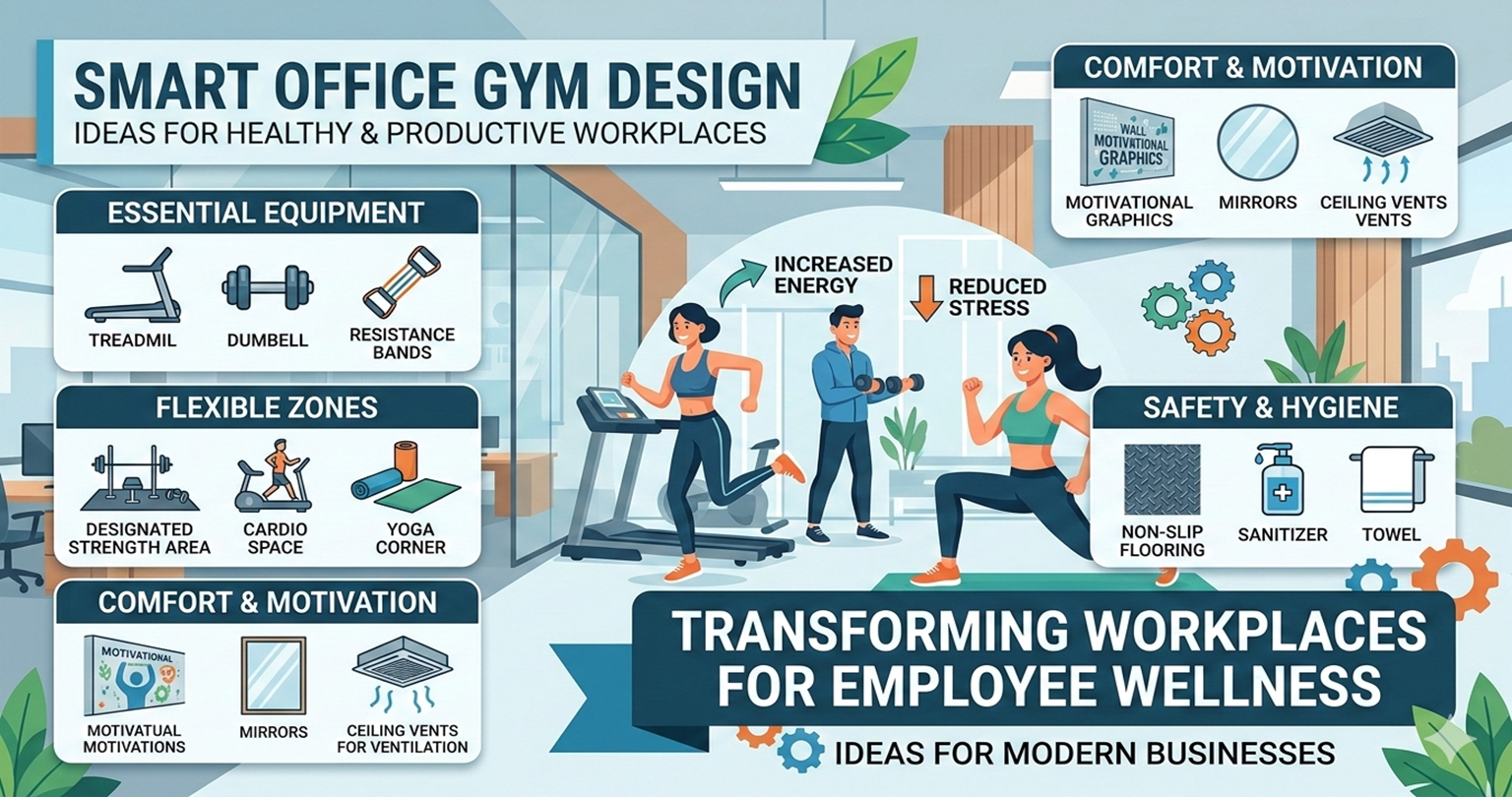
Modern workplaces are changing rapidly as companies place greater importance on employee health and well-being. In recent years, many organizations have started adding gym facilities inside their offices to support a healthier work environment. Office gyms are becoming a popular workplace feature because they help employees stay active without needing to visit a separate fitness center after work.
Long hours of sitting at desks can lead to physical discomfort, stress, and reduced energy levels. By providing a gym within the office, companies encourage employees to take short breaks, exercise regularly, and maintain a healthier lifestyle. Even a quick workout during lunch breaks or before leaving the office can improve both physical health and mental focus.
Office gyms also contribute to higher productivity. When employees stay active, they often feel more energetic and motivated throughout the day. Regular exercise can help reduce stress, improve mood, and boost concentration. As a result, employees may perform their tasks more efficiently and maintain better work-life balance.
Another important reason businesses are investing in office gyms is to create a positive company culture. Wellness-focused workplaces often attract talented professionals who value health and work environment. By supporting employee fitness, companies show that they care about their team’s overall well-being.
Smart office gym design ensures that fitness spaces are safe, functional, and motivating, helping organizations build healthier and more productive workplaces.
Benefits of Having an Office Gym for Employees and Businesses
Providing a gym within the office offers many benefits for both employees and the organization. As companies focus more on employee wellness, office gyms are becoming an important feature of modern workplaces. A well-designed office gym encourages employees to stay active and maintain a healthier lifestyle while balancing their professional responsibilities.
Improved Employee Health and Energy
Regular physical activity helps employees maintain better physical health. Exercise improves cardiovascular health, strengthens muscles, and increases overall energy levels. When employees have easy access to a gym at work, they are more likely to include fitness in their daily routine. Even short workout sessions can help reduce fatigue and keep employees feeling more energized throughout the day.
Reduced Stress and Better Mental Well-Being
Workplace stress is common in many industries, and regular exercise is one of the most effective ways to manage it. Physical activity releases endorphins, which help improve mood and reduce anxiety. An office gym provides employees with a convenient way to relieve stress, clear their minds, and return to work feeling refreshed and focused.
Higher Productivity and Motivation
Employees who stay active often experience improved concentration and mental clarity. Exercise increases blood flow to the brain, which helps enhance focus and decision-making. When employees feel physically and mentally refreshed, they are more likely to stay motivated and productive during their work hours.
Positive Workplace Culture and Talent Retention
An office gym also helps create a positive company culture. Employees appreciate workplaces that invest in their well-being. Offering fitness facilities shows that the organization values employee health and work-life balance.
Many companies also integrate gym spaces into their overall Commercial Interior Design strategy. By carefully planning wellness areas within the office layout, businesses can create work environments that support both productivity and employee satisfaction.
Choosing the Right Space for an Office Gym
Selecting the right location for an office gym is an important step in creating a functional and comfortable fitness area. The space should be large enough to accommodate essential equipment while still allowing employees to move safely and exercise comfortably. Proper planning helps ensure that the gym becomes a useful and enjoyable part of the workplace.
Converting Unused Office Areas
Many companies create office gyms by converting unused or underutilized spaces within the workplace. Empty meeting rooms, storage areas, or extra office sections can be transformed into small fitness zones. This approach allows businesses to add wellness facilities without requiring additional construction or major renovations.
Basement, Rooftop, or Spare Room Options
Some offices use basements, rooftops, or spare rooms to build dedicated gym areas. A basement can provide a quiet and private workout environment, while a rooftop gym may offer fresh air and natural lighting. Spare rooms within the office can also be converted into compact workout areas that employees can access easily during the workday.
Space Planning for Safety and Comfort
Proper space planning is essential when designing an office gym. There should be enough room between equipment to allow safe movement during workouts. Machines should not be placed too close together, and there should be clear walking paths throughout the gym. Adequate space also helps prevent accidents and creates a more comfortable exercise environment.
Ventilation and Lighting
Good ventilation and lighting are crucial for any fitness space. Proper airflow keeps the environment fresh and comfortable during workouts. Natural lighting can also improve the atmosphere and make the gym feel more open and inviting.
When the right space is selected and planned carefully, an office gym can become a valuable wellness feature that supports employee health and productivity.
Essential Equipment for a Smart Office Gym
Choosing the right equipment is an important part of designing a functional office gym. The goal is to provide employees with a variety of workout options while keeping the space practical and organized. A smart office gym does not need to include every type of machine. Instead, it should focus on essential equipment that supports different types of workouts and fitness levels.
Cardio Machines for Energy and Endurance
Cardio equipment is a key component of any office gym. Machines such as treadmills, stationary bikes, and elliptical trainers help employees improve cardiovascular health and increase stamina. These machines are ideal for quick workouts before work, during lunch breaks, or after office hours. Cardio exercises also help boost energy levels and improve focus during the workday.
Strength Training Equipment
Strength training equipment allows employees to build muscle and improve overall fitness. Basic equipment such as dumbbells, kettlebells, and adjustable weight benches can provide effective strength workouts without taking up too much space. These tools allow users to perform various exercises that target different muscle groups.
Resistance Bands and Functional Fitness Tools
Resistance bands and functional fitness equipment are great additions to an office gym because they are compact and versatile. Items such as resistance bands, medicine balls, and stability balls can support stretching, mobility training, and strength exercises. These tools are especially useful for employees who prefer lighter workouts or rehabilitation exercises.
Multi-Purpose Equipment for Compact Spaces
Many offices have limited space for a gym, so multi-purpose equipment can be very helpful. Adjustable benches, compact cable machines, or all-in-one workout stations allow employees to perform multiple exercises using a single piece of equipment. This approach saves space while still providing a wide range of workout options.
By selecting the right combination of cardio machines, strength equipment, and functional training tools, companies can create a smart office gym that supports employee health while fitting comfortably within the workplace environment.
Creating a Motivating and Comfortable Gym Environment
Designing an office gym is not only about placing equipment in a room. The environment of the gym also plays a major role in encouraging employees to stay active. A well-designed gym space should feel comfortable, motivating, and energizing so that employees feel excited to use it regularly. When the atmosphere is positive and inviting, employees are more likely to include workouts in their daily routine.
Proper Lighting and Ventilation
Lighting and ventilation are essential for creating a comfortable workout environment. Bright and balanced lighting helps employees stay alert and energized while exercising. Natural light, if available, can make the gym feel more open and refreshing. Good ventilation is equally important because it keeps the air fresh and prevents the space from feeling too warm or crowded during workouts.
Motivational Wall Designs
Motivational wall designs can add energy and inspiration to the gym space. Many office gyms include motivational quotes, creative graphics, or vibrant colors on the walls to encourage employees to stay active. Mirrors are also commonly used in fitness spaces because they help individuals check their form while exercising and make the room appear larger.
Music and Sound Systems
Music can significantly improve the workout experience. Installing a simple sound system allows employees to play energizing music during workouts. Music helps maintain rhythm during exercises and creates a lively gym atmosphere that encourages movement.
Temperature Control and Comfort
Maintaining a comfortable temperature is important for any fitness environment. Air conditioning or proper airflow ensures that the gym remains comfortable even during intense workouts.
A well-designed gym environment motivates employees to stay active and supports a healthier and more productive workplace.
Designing Flexible Workout Zones
A well-organized office gym should include different workout zones that support various types of exercises. Instead of placing all equipment in one area, dividing the gym into specific sections helps create a safer and more functional workout environment. Flexible workout zones allow employees to choose the type of exercise they prefer while keeping the space organized and easy to use.
Cardio Training Area
The cardio zone is usually one of the most frequently used sections of an office gym. This area includes machines such as treadmills, stationary bikes, and elliptical trainers. Placing these machines together helps employees easily access equipment designed for endurance and heart health. Cardio equipment should also be positioned with enough space around it so users can exercise comfortably.
Strength Training Zone
The strength training area is designed for exercises that focus on building muscle and improving overall strength. This section typically includes dumbbells, kettlebells, weight benches, and resistance machines. Keeping strength equipment in a dedicated area helps employees perform their workouts safely and prevents overcrowding in other parts of the gym.
Stretching and Yoga Space
A stretching or yoga area is another valuable feature in an office gym. This open space allows employees to perform warm-ups, cool-down stretches, or yoga sessions. Yoga mats, foam rollers, and stability balls can be placed in this zone to support flexibility and relaxation exercises.
Safe Spacing Between Equipment
Proper spacing between machines and workout zones is essential for safety. Employees should have enough room to move freely without feeling crowded. Clear pathways also help prevent accidents and make the gym easier to navigate.
By organizing the office gym into flexible workout zones, companies can create a more efficient and enjoyable fitness space that supports different exercise preferences.
Adding Wellness and Recovery Areas
A well-designed office gym should not only focus on exercise but also support recovery and relaxation. Wellness and recovery areas allow employees to rest, stretch, and recharge after workouts. These spaces help reduce muscle tension and promote overall well-being, making the gym more comfortable and beneficial for employees.
Stretching and Relaxation Zones
A dedicated stretching area is an important feature in any office gym. After exercising, employees need space to perform cool-down stretches that help prevent muscle soreness and improve flexibility. This area can include yoga mats, foam rollers, and stability balls that support stretching and mobility exercises. A calm and open space encourages employees to relax and take a few minutes to recover after their workouts.
Massage Chairs and Recovery Tools
Some office gyms include massage chairs or basic recovery tools to help employees relax after physical activity. These tools can help relieve muscle tension and improve circulation. Even simple recovery equipment like massage rollers or stretching bands can provide comfort and support muscle recovery.
Hydration and Healthy Snack Stations
Hydration is essential during and after workouts. A small hydration station with water dispensers encourages employees to stay hydrated. Some companies also add healthy snack options such as fruits or energy bars to promote better nutrition.
Adding wellness and recovery areas makes the office gym more complete and supports a balanced approach to employee health and fitness.
Safety and Hygiene in Office Gym Design
Safety and hygiene are essential aspects of designing an office gym. Since multiple employees may use the gym throughout the day, the space should be planned in a way that prevents injuries and maintains cleanliness. A safe and hygienic environment encourages employees to use the gym confidently and regularly.
Non-Slip Flooring and Safe Equipment Placement
Flooring plays a very important role in gym safety. Non-slip rubber flooring or specialized gym mats help prevent slips and reduce the risk of injuries during workouts. Proper placement of equipment is also necessary to ensure there is enough space between machines. Clear pathways should be maintained so employees can move around the gym safely without bumping into equipment.
Sanitization Stations
Hygiene should be a top priority in shared fitness spaces. Placing sanitization stations with disinfectant sprays and wipes allows employees to clean equipment before and after use. This simple practice helps maintain cleanliness and reduces the spread of germs in the gym.
Clear Safety Guidelines
Displaying safety guidelines and proper equipment usage instructions can also improve safety. Posters or signage that explain how to use machines correctly can help prevent accidents, especially for beginners who may be unfamiliar with certain equipment.
By focusing on safety and hygiene, companies can create an office gym that supports employee wellness while maintaining a clean, secure, and comfortable fitness environment.
Integrating Office Gym Design with Workplace Interiors
An office gym should not feel like a completely separate space from the rest of the workplace. Instead, it should be designed in a way that complements the overall office environment. When the gym design matches the style and layout of the office, it creates a more balanced and professional atmosphere. Integrating fitness areas with workplace interiors also helps make the gym feel like a natural part of the company culture.
Matching Gym Design with Office Aesthetics
The colors, materials, and design elements used in the gym should align with the overall style of the office. For example, if the workplace follows a modern design theme, the gym can include sleek equipment, minimal décor, and neutral color tones. Consistent design elements help maintain a unified look across the office.
Using Durable and Modern Materials
Gym spaces require materials that are both stylish and durable. Rubber flooring, sturdy metal equipment, and easy-to-clean surfaces are commonly used in office gyms. These materials help maintain safety and cleanliness while still fitting well within modern office interiors.
Aligning with Commercial Interior Design Strategy
Many companies include wellness spaces like gyms as part of their broader Commercial Interior Design strategy. By carefully planning the layout, materials, and design style, businesses can create gym areas that blend smoothly with the rest of the workplace.
When fitness spaces are thoughtfully integrated into the office design, they enhance both the visual appeal of the workplace and the overall employee experience.
Conclusion: Building Healthier and More Productive Workplaces
Office gyms are becoming an important feature in modern workplaces as companies focus more on employee health and well-being. Providing a dedicated fitness space allows employees to stay active, reduce stress, and maintain better physical and mental health during their busy work schedules.
A well-designed office gym should include the right equipment, proper layout, and a motivating environment that encourages regular use. Features such as flexible workout zones, recovery areas, and safe gym flooring help create a comfortable and functional fitness space for employees.
When businesses invest in thoughtful gym design, they not only support employee wellness but also improve productivity and workplace satisfaction. Active employees often feel more energized, focused, and motivated throughout the workday.
By integrating office gyms into workplace planning, companies can create healthier work environments that promote balance, improve employee morale, and contribute to long-term organizational success.